先认清正在被解释的经句
所选写本的乾卦经句是“乾元亨利貞”。[1] 同一卷中,读者还会遇到彖、大象、附着具体爻位的小象,以及古注、疏。它们在版面上相邻,很容易被连读成同一个人的连续说明。可靠的读法是先问:这里是谁的文字,正在解释什么?卦辞的四个词、针对整卦的论述、回应一爻的说明,承担的任务并不相同。
本文使用日本国立公文书馆所藏、由机构关联镜像明确识别的《周易注疏》写本。其抄写时代是馆目字段,实物的确切抄写日期未核定。[6] 我们区分的是此见本实际可见的文字层次,不能由此考定每层的成书年代、认证作者手稿,或解决十翼作者归属。扫描图号用来找到影像,不充作已辨明的写本叶码。
彖把卦辞扩展到较大的说明范围
所选起句为“彖曰大哉乾元萬物資始乃統天”。[2] 本站整理为:“彖曰:大哉乾元!万物资始,乃统天。”这是现代断句,不是对原有标点的认证。我们可将其解释为:乾之“元”被赞为广大,万物从中取得开端,并被置于与天的关系中。解释保留“元”,因为把它定译为起源、开端或另一概念,本身已是一项选择。
它与卦辞的差别十分具体。彖明确提到“乾元”,又增加万物资始、统天的关系。这些是解释层新增的论述,不能偷偷添进“乾元亨利貞”,再说添完的长句就是经文原句。所选起句也没有平均解释四个词;它提供一个观察彖如何展开说明的入口,尚不能代替整篇彖辞的校读。
大象同时改变了对象与行动
另一层写“象曰天行健君子以自強不息”。[3] 本站断读为:“象曰:天行健,君子以自强不息。”前半描述天的运行,后半出现君子这一理想化行动者,以及持续自强的实践。“以”将所述形象与行动理由联结起来。
这里新增的不是“元”或“贞”的一个同义词。大象把形象引向人应怎样行动;称其为伦理解释,是说明这项可见的转向,不是说卦辞四词已包含后句全部训诫。今天读“自强不息”,也不必将它强制改成忽略疲劳、健康或生活条件的要求。本文讨论的是古代解释文字怎样建立行为模型,而不是替现代读者制定身体与工作规则。
小象回应的是特定爻位
初爻经句为“初九潛龍勿用”。[4] 可理解为:初九,潜藏之龙,勿用。所选小象则写“潛龍勿用陽在下也”。[5] 重合部分保留了潜龙与否定指令,新增的“阳在下”则以阳的位置解释这项指令。两层的联系明确,责任也应明确。
小象针对的是初九,比彖所展开的整卦论述更窄。如果拿小象所在页替代经句来源,便会把解释悄悄带入经文;如果讲小象时又删去“陽在下也”,则抹掉了本来要比较的解释步骤。“勿用”还应保留初九这一位置资格,不能扩大成“乾卦在所有情形都禁止行动”。
四层分别留下四个阅读问题
| 所选层次 | 实际对象 | 有限段落所增加的内容 | 应继续追问 |
|---|---|---|---|
| 卦辞经文 | 乾卦 | “乾元亨利貞” | 哪些词义仍由读者选择? |
| 彖 | 乾之元 | 万物资始与统天关系 | 解释增加了什么? |
| 大象 | 天行与君子 | 持续行动的模型 | 形象怎样成为行为理由? |
| 初九小象 | 潜龙勿用这一爻 | 阳在下的说明 | 哪个爻位限制解释范围? |
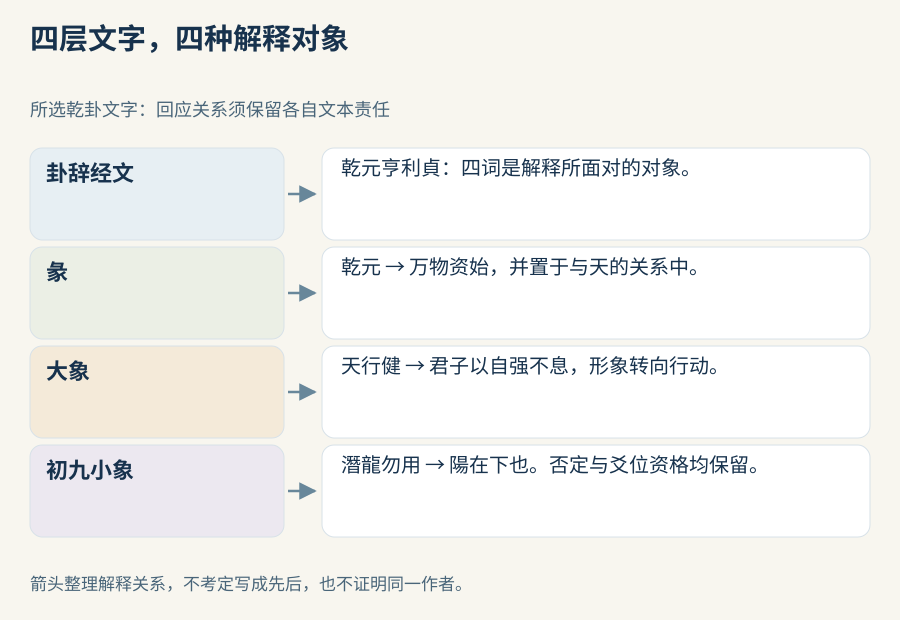
图表默认完整显示;点击图表可放大查看。 打开原图 · PNG
图是本站对有限材料所作的原创关系整理。箭头表示回应或提供解释,不证明各层写成的时间先后。古注与疏还可继续解释这些文字;使用时须给它们另立标签与依据,不能因为字体较小便将其内容无声并入经句。
文字回应能证明解释关系,不能证明同一作者
现代研究将经、十翼与后续解释史分层讨论。[7] 这条简短的学术整理帮助我们提出问题;本文具体比较的证据,仍是上面逐层定位的写本文字。一段文字明确回应另一句,证明其解释关系,并不单凭这一点证明作者与日期相同。
分层带来的好处是可以追溯。觉得某个解释有说服力时,我们能指出它依靠哪些字,新增内容由哪层提供。两种解释关注不同对象时,也可以比较它们各自添加了什么,而不急于宣布古经自相矛盾。把诸层连起来读仍有价值,前提正是各自责任可见。这样的阅读揭示一场文本间的对话,无须把古代形象变成对今日个人生活已经验证的预测。
依据与延伸阅读
經/乾卦辭;卷1,扫描图2,写本叶码未核定。所选来源页
傳/彖傳;卷1,扫描图10,写本叶码未核定。所选来源页
傳/大象;卷1,扫描图13,写本叶码未核定。所选来源页
經/乾初九;卷1,扫描图3,写本叶码未核定。所选来源页
傳/初九小象;卷1,扫描图15,写本叶码未核定。所选来源页
別046-0003写本馆目字段/manuscript catalogue fields;来源网页,古本印页不适用。所选来源页
Chinese Philosophy of Change (Yijing);来源网页,古本印页不适用。所选来源页
经、传、疏、译文与现代学术分别归属。重文标记按已注明方式展开;现代断句、翻译、图表与比较为本站原创。原影不转载,未核叶码保空;有限解读不等全书校定、作者亲笔认证或现实预测验证。
本篇依据与来源角色
下列角色区分古本正文、旧注、文献史研究与工具复算;篇末编号源注保留具体图页及其说明。馆藏或学术来源不表示对命理预测的认可。
- YC3-E01-QIAN-JING · 古本文字依据: 經/乾卦辭
原图文字层次: Classical Qian judgement; finite selected wording in the identified manuscript. Classical text, explanatory Wings and subcommentary are separately attributed.National Archives of Japan 別046-0003 Zhou yi zhu shu manuscript; copying era catalogued as Muromachi, actual copying date unverified
卷1 · 扫描 2 · 未核见本页页码
The selected classical four-term statement is distinct from the neighbouring explanation. Punctuation and translations are editorial.
Not a full-volume collation, composition dating, original autograph authentication, variant census, predictive efficacy, or complete Ten Wings study.
- YC3-E04-QIAN-TUAN-FINAL · 古本文字依据: 傳/彖傳
原图文字层次: Tuan explanation; finite selected wording in the identified manuscript. Classical text, explanatory Wings and subcommentary are separately attributed.National Archives of Japan 別046-0003 Zhou yi zhu shu manuscript; copying era catalogued as Muromachi, actual copying date unverified
卷1 · 扫描 10 · 未核见本页页码
This is the selected Tuan opening, not the classical judgement. Its relationship to the judgement does not establish common authorship.
Not a full-volume collation, composition dating, original autograph authentication, variant census, predictive efficacy, or complete Ten Wings study.
- YC3-E05-QIAN-DAXIANG-FINAL · 古本文字依据: 傳/大象
原图文字层次: Great Image explanation; finite selected wording in the identified manuscript. Classical text, explanatory Wings and subcommentary are separately attributed.National Archives of Japan 別046-0003 Zhou yi zhu shu manuscript; copying era catalogued as Muromachi, actual copying date unverified
卷1 · 扫描 13 · 未核见本页页码
The selected Great Image crosses two columns: 象曰天 at one column’s end, followed by 行健君子以自強不息. It adds a junzi practice.
Not a full-volume collation, composition dating, original autograph authentication, variant census, predictive efficacy, or complete Ten Wings study.
- YC3-E02-QIAN-INITIAL-JING-FINAL · 古本文字依据: 經/乾初九
原图文字层次: Classical Qian initial-nine line; finite selected wording in the identified manuscript. Classical text, explanatory Wings and subcommentary are separately attributed.National Archives of Japan 別046-0003 Zhou yi zhu shu manuscript; copying era catalogued as Muromachi, actual copying date unverified
卷1 · 扫描 3 · 未核见本页页码
The initial-nine position and 勿 negative remain in the finite classical quotation; the Small Image is separately located.
Not a full-volume collation, composition dating, original autograph authentication, variant census, predictive efficacy, or complete Ten Wings study.
- YC3-E06-QIAN-XIAOXIANG-FINAL · 古本文字依据: 傳/初九小象
原图文字层次: Initial-nine Small Image explanation; finite selected wording in the identified manuscript. Classical text, explanatory Wings and subcommentary are separately attributed.National Archives of Japan 別046-0003 Zhou yi zhu shu manuscript; copying era catalogued as Muromachi, actual copying date unverified
卷1 · 扫描 15 · 未核见本页页码
This Small Image responds to initial nine, adding 陽在下也. Its explanatory words are not imported into the classical line.
Not a full-volume collation, composition dating, original autograph authentication, variant census, predictive efficacy, or complete Ten Wings study.
- YC3-E00-CATALOGUE · 历史写本馆藏书目: 別046-0003写本馆目字段/manuscript catalogue fields
书目文本层次: Institutional-linked catalogue identification through the mirror. Muromachi is a catalogue era label, not a physical copying inscription.National Archives of Japan 別046-0003 Zhou yi zhu shu manuscript; copying era catalogued as Muromachi, actual copying date unverified
This collection uses finite classical, Wing and subcommentary passages. The thirteen-volume corpus is not wholly collated; original authorship of the Wings is not authenticated here.
No fresh official/mirror byte-equivalence verification, original autograph or complete critical edition claimed.
- YC3-E17-SEP-HON · 现代学术分析: Chinese Philosophy of Change (Yijing)
现代学术文本层次: Tze-Ki Hon’s modern scholarly organization of textual layers and interpretive history; not an ancient text witness.Stanford Encyclopedia of Philosophy, Summer 2024 archive
A single brief attributed synopsis supplies an organizing distinction. The manuscript analysis, diagrams and translations in these articles are original.
No saved modern HTML, copyrighted translation passages or complete article reproduced.