Xu and Song offer a particularly clear test of a popular reading shortcut. Both judgements contain 有孚 and the image of crossing a great river. Yet one says 利涉大川 and the other 不利涉大川. Shared vocabulary supplies a point of comparison; it does not supply the same permission.
We read the actual qualifications and selected scenes before translating Xu as waiting or Song as dispute. Those English names organize the article. They do not turn every modern delay into Xu, every disagreement into Song, or either text into legal advice.
Put the negative back beside its object
Xu's judgement reads 需有孚光亨貞吉利涉大川. Song's reads 訟有孚窒惕中吉終凶利見大人不利涉大川.[1,2] The river phrase is almost identical, but Song's 不 changes its assessment. A keyword search for 涉大川 would find a shared image and miss the decisive difference unless it retained the surrounding words.
有孚 also appears in both. We provisionally render it as assurance or trustworthiness, while recognizing that translating a traditional term requires interpretation. The shared term does not make the remainder of the judgements equal: Song retains 窒惕, 中吉 and 終凶 where Xu has 光亨 and 貞吉. A claim that sincere intention always guarantees a favorable outcome cannot be derived from these two passages.
The exercise is therefore not to choose a universal verdict for river crossing. It is to attach each judgement to its own named situation and qualification. The text provides those differences; an actual crossing plan would require real conditions that this literary comparison does not supply.
Xu's waiting is situated
The fifth nine of Xu reads 九五需于酒食貞吉.[3] The preposition 于 attaches waiting to wine and food, and 貞吉 remains part of the line. Saying only “be patient” loses both the location or setting and the qualification. Conversely, recommending wine and food to anyone facing a delay would transfer a particular classical scene to an unspecified modern audience.
The upper six adds another situation: 上六入于穴有不速之客三人來敬之終吉.[4] It describes entering a hole, three uninvited guests coming, and 敬之 before 終吉. One close translation preserves that order: show them respect; the end is favorable. The response and its object matter, rather than a universal claim that every unexpected visitor brings good fortune.
This line crosses two scans in the manuscript. 客三 ends one selected page segment and 人來 continues the next. Keeping the full phrase prevents the number three from becoming detached from the people or from disappearing behind a familiar paraphrase. Annotation on the page is separately marked and is not inserted into the line.
Neither selected Xu line defines waiting as sheer inactivity. One places it within a named setting; another includes a response to an encounter. We can discuss that contrast without inferring a complete policy for handling strangers or emergencies.
Song's withdrawal has a named surrounding community
Song's second nine reads 九二不克訟歸而逋其邑人三百戶无眚.[5] It joins failure to prevail in dispute with returning and fleeing or withdrawing, then names the people of a settlement of three hundred households and no calamity. This witness uses 无 in that last phrase.
A simplified “retreat and you will win” would change two things. It would reverse the explicit 不克 into personal victory, and remove the households that the sentence actually mentions. The passage's number is part of its represented scene. We have not identified a historical settlement or independently verified a census from it.
This is also why turning Song directly into modern litigation advice is a poor reading. The sentence does not identify a jurisdiction, a claim, a deadline or a legal remedy. Its useful textual contrast is between prevailing, withdrawal and the differently named scope of the outcome. A modern dispute would need its own evidence and institutions.
Receiving something does not settle its duration
Song's upper nine reads 上九或錫之鞶帶終朝三褫之.[6] It places a possible granting of the named belt beside repeated stripping away within a morning. 或 keeps the initial event qualified; 三褫 does not allow the grant to be treated as secure possession.
We need not translate this into a particular contemporary award or court victory to see its force. The object received and its loss are both present. A reading that extracts only the granting would erase the counterstatement in the same line. The earlier judgement's 終凶 and the upper line's loss are separate located statements, not a continuous sentence or a recorded case history.
Keep the comparison at the proper scale
| Unit | Xu | Song | What must remain attached |
|---|---|---|---|
| Shared language | 有孚 | 有孚 | The different following qualifications |
| River crossing | 利涉大川 | 不利涉大川 | The negative and its object |
| Selected encounter or withdrawal | Three guests; 敬之; 終吉 | 不克訟; settlement households; 无眚 | Actor, response and scope |
| Another selected line | Wine and food; 貞吉 | Possible belt grant and stripping away | Scene, condition and duration |
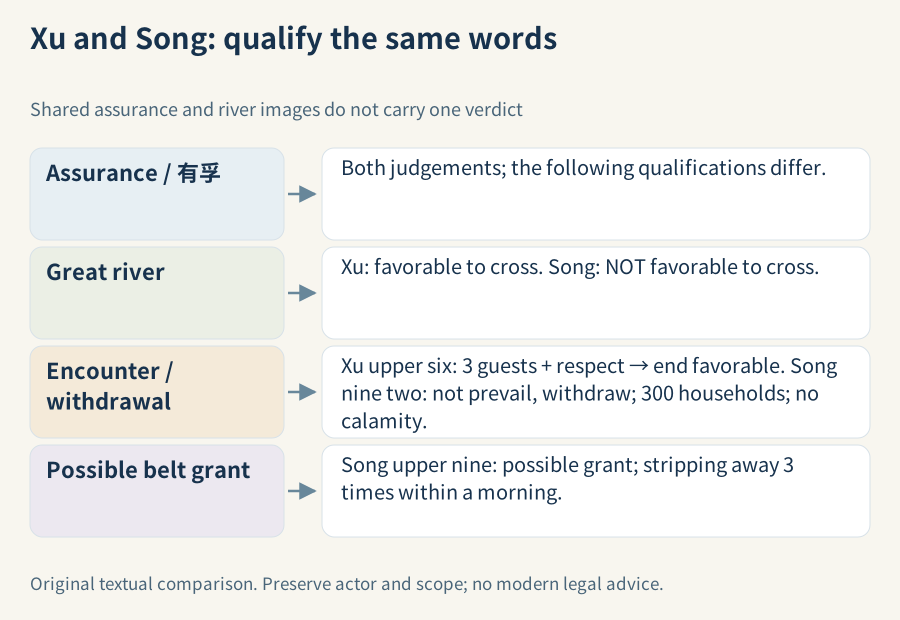
The complete figure is shown below. Select it to enlarge the labels. Open full-size figure · PNG
The table does not say that the two selected encounters correspond to the same event. It shows how to align questions: what action, what object, which qualification, which unit? Xu's waiting and Song's dispute become more specific when these fields stay visible.
A modern analogy should declare its additions. We may compare the passages to the difference between having confidence and having adequate grounds for an action. That is our explanatory comparison, not a claim that the ancient texts supplied today's legal or risk rules. The next pair, Tai and Pi, applies the same discipline to openness and blockage, including lines that unsettle the apparent permanence of those labels.
Sources and further reading
需卦辞(经);卷2, scan22; manuscript folio unverified。Selected witness/source page
訟卦辞(经);卷2, scan26; manuscript folio unverified。Selected witness/source page
需所选爻辞(经);卷2, scan25; manuscript folio unverified。Selected witness/source page
需所选爻辞(经);卷2, scan25; manuscript folio unverified。Selected witness/source page Same-line continuation: 卷2 / scan26
訟所选爻辞(经);卷2, scan30; manuscript folio unverified。Selected witness/source page
訟所选爻辞(经);卷2, scan33; manuscript folio unverified。Selected witness/source page
別046-0003写本目录字段(Commons承接);Catalogue fields; ancient page number inapplicable。Selected witness/source page
Short quotations retain the selected manuscript’s classical forms. Punctuation, translations, comparisons and diagrams are original. Manuscript era is a catalogue field and unverified folios stay blank. Source scans are not republished; finite paired reading is not a complete 64-hexagram critical edition or validated life prediction.
Evidence and source roles
These roles distinguish ancient text, older commentary, historical scholarship and tool reproduction. The numbered notes in the article retain the precise scan pages and explanations. Library and academic sources do not endorse predictive claims.
- YC2-E03-XU-JUDGMENT · Ancient text evidence: 需卦辞(经)
Text layer in the witness: Classical hexagram statement in the identified manuscript. Interposed Wings, old annotation and subcommentary are excluded from the selected words. - YC2-E03-SONG-JUDGMENT · Ancient text evidence: 訟卦辞(经)
Text layer in the witness: Classical hexagram statement in the identified manuscript. Interposed Wings, old annotation and subcommentary are excluded from the selected words. - YC2-E03-XU-NINE-FIVE · Ancient text evidence: 需所选爻辞(经)
Text layer in the witness: Classical line statement in the identified manuscript. Interposed Wings, old annotation and subcommentary are excluded from the selected words. - YC2-E03-XU-UPPER-SIX · Ancient text evidence: 需所选爻辞(经)
Text layer in the witness: Classical line statement in the identified manuscript. Interposed Wings, old annotation and subcommentary are excluded from the selected words.Same-line continuation: 卷2 · scan 26 (manuscript folio unverified)
Literal forms such as 无, 爲, 于, 禦, 汔 and 恒 are retained where present. Punctuation, translations, diagrams and comparisons are original editorial work. Manuscript folio remains unverified, not inferred from the scan index. This line crosses scans 25→26; the first scan stops at 客三 and the second begins 人來. Both locations are supplied.
- YC2-E03-SONG-NINE-TWO · Ancient text evidence: 訟所选爻辞(经)
Text layer in the witness: Classical line statement in the identified manuscript. Interposed Wings, old annotation and subcommentary are excluded from the selected words. - YC2-E03-SONG-UPPER-NINE · Ancient text evidence: 訟所选爻辞(经)
Text layer in the witness: Classical line statement in the identified manuscript. Interposed Wings, old annotation and subcommentary are excluded from the selected words. - YC2-E00-CATALOGUE · Historical-manuscript library catalogue: 別046-0003写本目录字段(Commons承接)
Text layer in the catalogue: Historical-witness catalogue fields imported by the institutional-linked Commons mirror. The Muromachi label and catalogued responsibilities are metadata, not a dated copying inscription or authenticated autograph.